

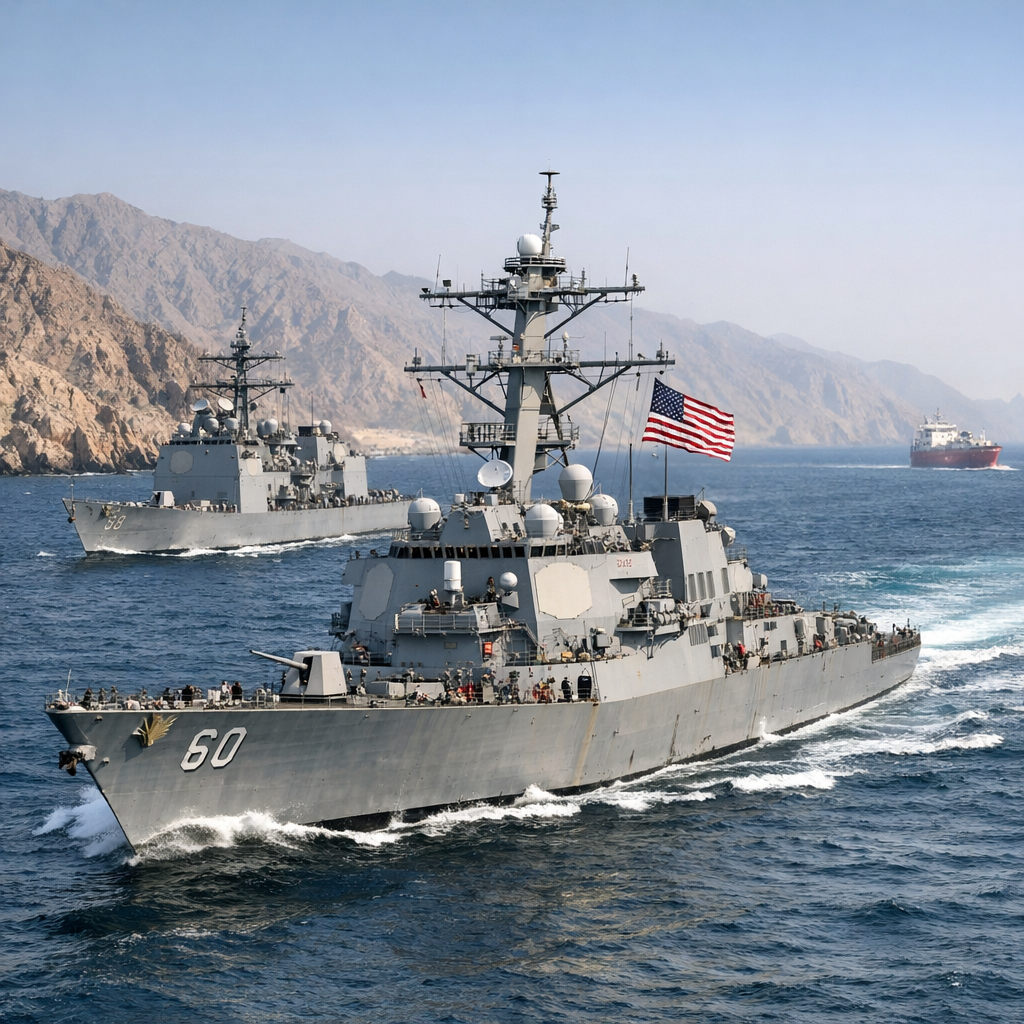
Recent developments in the Strait of Hormuz have garnered significant attention, with the U.S. Navy initiating ‘Project Freedom’ to ensure the safe passage of ships through this critical waterway. This move comes in response to escalating tensions and incidents in the region.
Background on the Strait of Hormuz
The Strait of Hormuz is a vital maritime chokepoint connecting the Persian Gulf with the Gulf of Oman and the Arabian Sea. Approximately 20% of the world’s petroleum passes through this narrow strait, making it a strategic focal point for global energy supplies.
Recent Developments
In early May 2026, the U.S. military confirmed the launch of ‘Project Freedom,’ a mission aimed at securing transit in the Strait of Hormuz. This initiative was prompted by a series of incidents, including attacks on commercial vessels and escalating threats from regional actors. The U.S. Navy’s presence is intended to deter further aggression and ensure the uninterrupted flow of maritime traffic.
Implications for Global and Local Economies
The stability of the Strait of Hormuz is crucial for global oil markets. Disruptions in this region can lead to significant fluctuations in oil prices, affecting economies worldwide. For communities like Snowmass, Colorado, which rely on tourism and have residents commuting to various parts of the state, increased fuel prices can impact travel costs and the overall cost of living.
Looking Ahead
While the U.S. military’s actions aim to stabilize the region, the situation remains fluid. It’s essential for residents to stay informed about developments, as changes in global oil markets can have cascading effects on local economies. Monitoring fuel prices and being aware of broader economic trends can help individuals and businesses in Snowmass make informed decisions in the coming months.